 Return
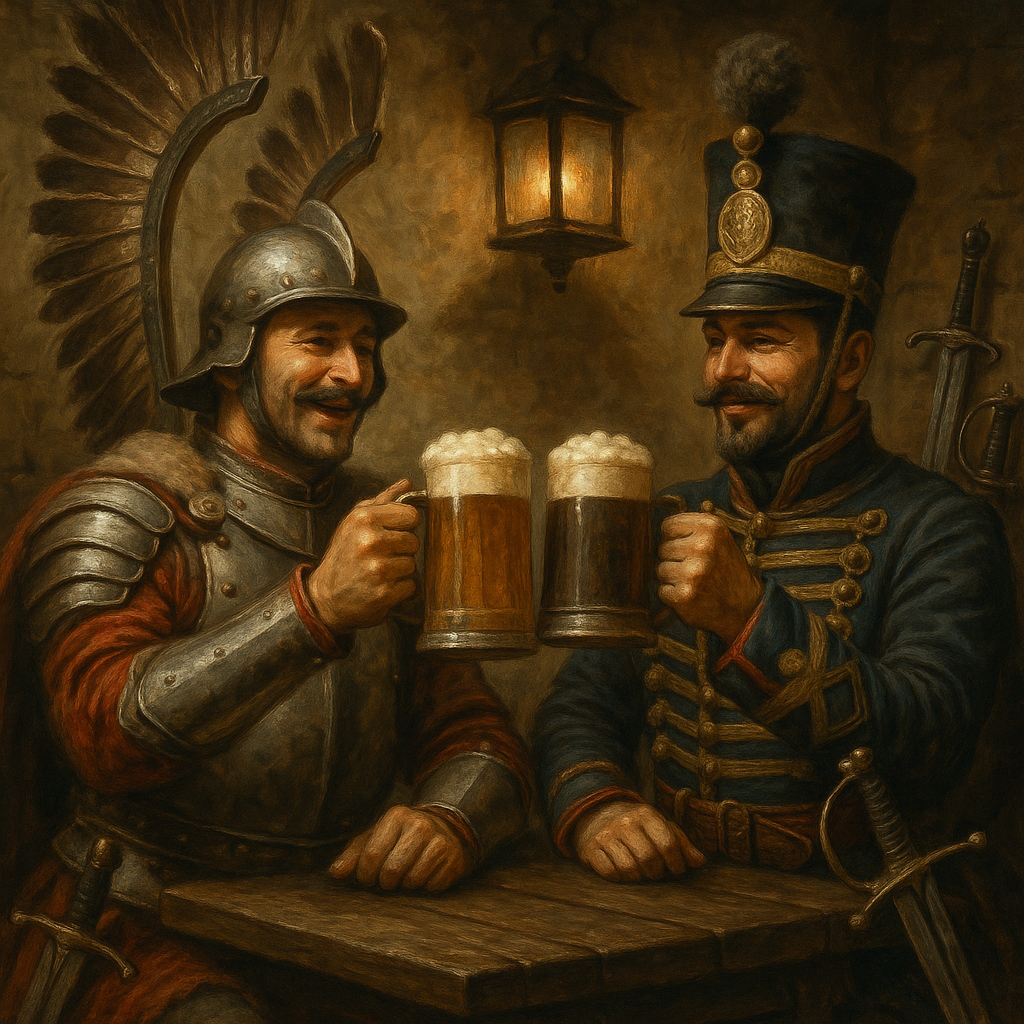
Polak, Węgier, dwa bratanki, i do szabli, i do szklanki
Text
Polak, Węgier, dwa bratanki, i do szabli, i do szklanki :
Tłumaczenie dosłowne: Polacy, Węgrzy, dwaj bracia, do szabli, i do szklanki
Tłumaczenie idiomatyczne: Polacy i Węgrzy, dwaj bracia w sercu, gotowi do wspólnej walki, a także do wspólnego picia.
Polacy i Węgrzy są historycznie bardzo blisko, prawie jak bracia.
Są zjednoczeni zarówno w czasach wojny (do szabli = 'do miecza'), jak i w czasach radości lub świętowania (do szklanki = 'do drinka').
Przyjaźń polsko-węgierska sięga kilku wieków wstecz: sojusze polityczne, małżeństwa królewskie, wzajemna pomoc wojskowa...
Przysłowie to jest również popularne na Węgrzech, w węgierskiej formie:
Lengyel, magyar - két jó barát, együtt harcol, s issza borát.
('Polacy, Węgrzy - dwaj dobrzy przyjaciele, razem walczą i razem piją wino'). Jest to czułe i pozytywne wyrażenie, symbol braterstwa między narodami.
Przysłowie to często odnosi się do przyjaźni polsko-węgierskiej, ale należy zauważyć, że słowo „Węgier” odnosiło się wówczas nie tylko do mieszkańców dzisiejszych Węgier.
We wcześniejszych wiekach Słowacja była częścią Królestwa Węgier, a kontakty kulturalne i gospodarcze między południowymi Polakami i północnymi Słowakami były częste,
Translation 1 (English)
Polak, Węgier, dwa bratanki, i do szabli, i do szklanki :
Literal translation: Poles, Hungarians, two brothers, for the sword, and for the glass
Idiomatic translation: Poles and Hungarians, two brothers at heart, ready to fight together as well as drink together.
Poles and Hungarians are historically very close, almost like brothers.
They are united both in times of war (do szabli = 'for the sword') and in times of joy or celebration (do szklanki = 'for the drink').
Polish-Hungarian friendship goes back several centuries: political alliances, royal marriages, military mutual aid...
This proverb is also popular in Hungary, in a Hungarian form:
Lengyel, magyar - két jó barát, együtt harcol, s issza borát.
('Poles, Hungarians - two good friends, they fight together and drink their wine together'). It is an affectionate and positive expression, a symbol of brotherhood between peoples.
This proverb often refers to Polish-Hungarian friendship, but it should be noted that the word ‘Węgier’ (Hungarian) at the time referred to much more than just the inhabitants of present-day Hungary.
In earlier centuries, Slovakia was part of the Kingdom of Hungary, and cultural and economic contacts between southern Poles and northern Slovaks were frequent,
Translation 2
Polak, Węgier, dwa bratanki, i do szabli, i do szklanki :
Traduction littérale : Polonais, Hongrois, deux frères, pour le sabre, et pour le verre
Traduction idiomatique : Polonais et Hongrois, deux frères de cœur, prêts à se battre ensemble comme à boire ensemble.
Les Polonais et les Hongrois sont historiquement très proches, presque comme des frères.
Ils sont unis à la fois dans les moments de guerre (do szabli = 'pour le sabre') et dans les moments de joie ou de fête (do szklanki = 'pour le verre').
L’amitié polono-hongroise remonte à plusieurs siècles : alliances politiques, mariages royaux, entraide militaire…
Ce proverbe est populaire aussi en Hongrie, sous une forme hongroise :
Lengyel, magyar – két jó barát, együtt harcol, s issza borát.
('Polonais, Hongrois — deux bons amis, ils se battent ensemble et boivent leur vin ensemble.') C’est une expression affectueuse et positive, symbole d’une fraternité entre peuples.
Ce proverbe fait souvent référence à l’amitié polono-hongroise, mais il faut noter que le mot “Węgier” (Hongrois) désignait à l’époque bien plus que les seuls habitants de la Hongrie actuelle.
Dans les siècles passés, la Slovaquie faisait partie du Royaume de Hongrie, et les contacts culturels et économiques entre les Polonais du sud et les Slovaques du nord étaient fréquents,
En réalité, il incluait aussi les habitants de la Haute-Hongrie — une région correspondant en grande partie à la Slovaquie actuelle. Ce qui fait que ce proverbe était à l'origine destiné aux slovaques, et non aux hongrois.